Siding repair in Portland, Oregon is mostly about stopping water. A split board or a patch of soft trim is the symptom; the useful part of the repair is finding what let water in (a failed caulk joint, a missing kickout flashing, a window with no sill pan, boards touching soil or roofing) and fixing that at the same time. Repair the board and leave the leak, and the new wood rots on the same schedule as the old.
To price a repair, request a siding quote and describe which boards or trim are affected and where you think water is getting in.
What counts as a siding repair?
- Board and panel replacement. Cutting out rotted, split or swollen boards and weaving in new ones, staggered so the joints do not line up.
- Trim and sills. Corner boards, window trim and sills are the first wood to rot because water sits on their top edges. See dry rot in siding, and the dry rot guide for Portland homes for the ten places it most often starts.
- Leak repair. Opening the wall where stains show and rebuilding the flashing and house wrap. See water behind siding.
- Storm damage. Closing up walls opened by falling limbs, ice or wind.
- Woodpecker holes. Filling small holes, or replacing boards a flicker has dug through into the wall, after checking for an active nest, insects and rot. See woodpecker holes in siding for the repair order and what keeps the bird off afterwards.
- Paint failure. Finding why paint keeps peeling on the same boards before repainting them.
- Partial T1-11 replacement. Swapping failed panels and adding the Z-flashing that was missing. See T1-11 damage.
How do contractors find the source of a leak?
Water runs down and sideways behind siding, so the stain is rarely under the leak. Contractors start above the damage and work up: the roof edge above the wall, the window head and its flashing, any deck ledger or light fixture. A moisture meter or a probe into the sheathing through a removed board shows how far the wetting goes. Expect them to take off a few boards; a leak repair priced without opening the wall is a guess.
Storm, ice and wind damage
Portland-area winters bring down limbs onto houses. The February 2021 ice storm cut power to about 420,000 PGE customers, the largest outage in the utility’s history, and in January 2024 the National Weather Service recorded east winds gusting 40 to 60 mph across the metro, followed by freezing rain that caused significant tree damage; PGE reported more than 800 distribution lines down. When a limb breaks through siding, the wrap and sheathing behind are exposed. Cover the opening, photograph everything for your insurer, and get the section rebuilt before the next rain rather than the next season. What a homeowners policy usually pays for, and how an Oregon claim runs, is set out in the guide to siding damage and insurance.
Matching old boards
Matching is the hard part of most repairs. The contractor needs to know the material (wood, hardboard, fiber cement, vinyl), the exposure (how much of each board shows), the profile (bevel, Dutch lap, shiplap, channel) and the texture. Hardboard siding is no longer made in most of its original profiles, so a hardboard repair usually means fiber cement or engineered wood cut to the same exposure, or borrowing boards from a hidden wall. On older houses, historic wood siding repair covers matching original profiles. A single cracked or loose panel on a vinyl wall is its own job: see vinyl siding repair.
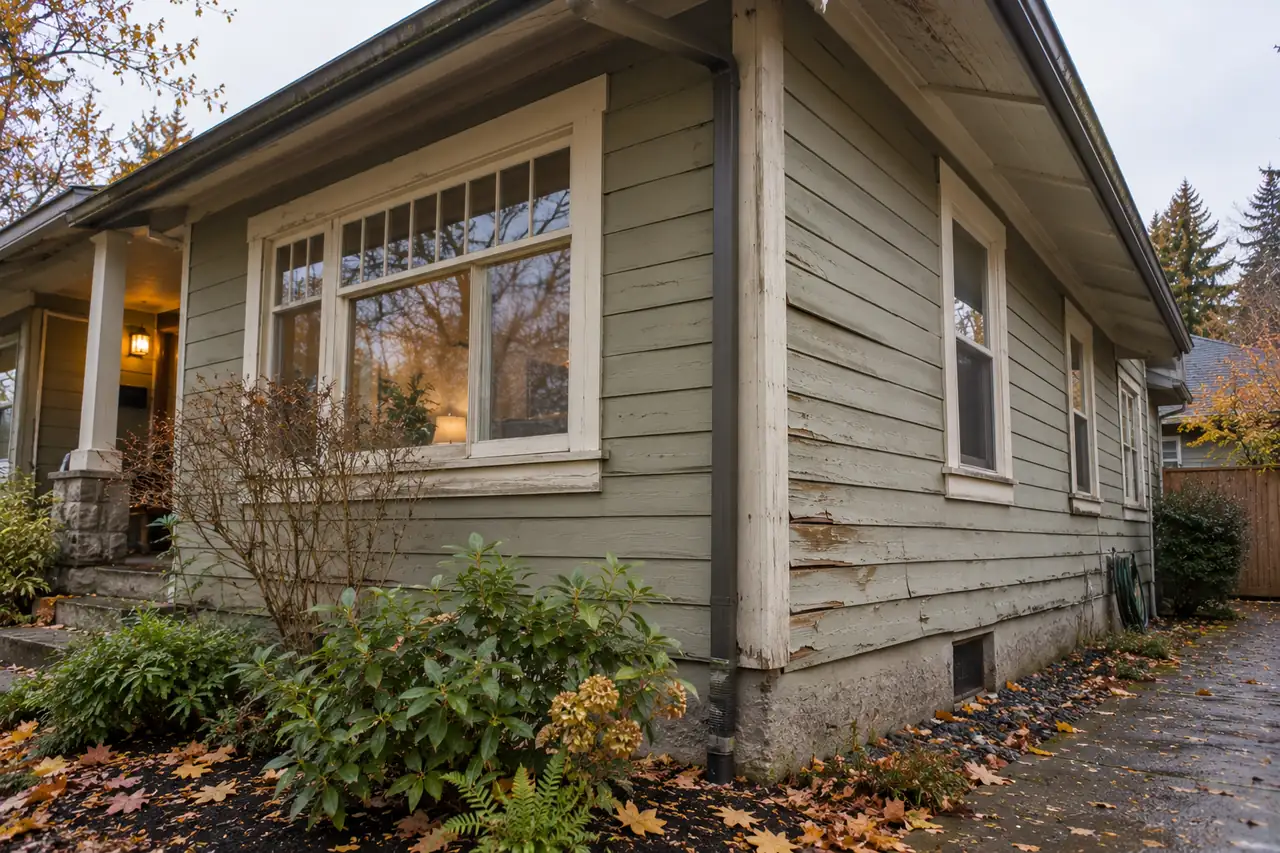
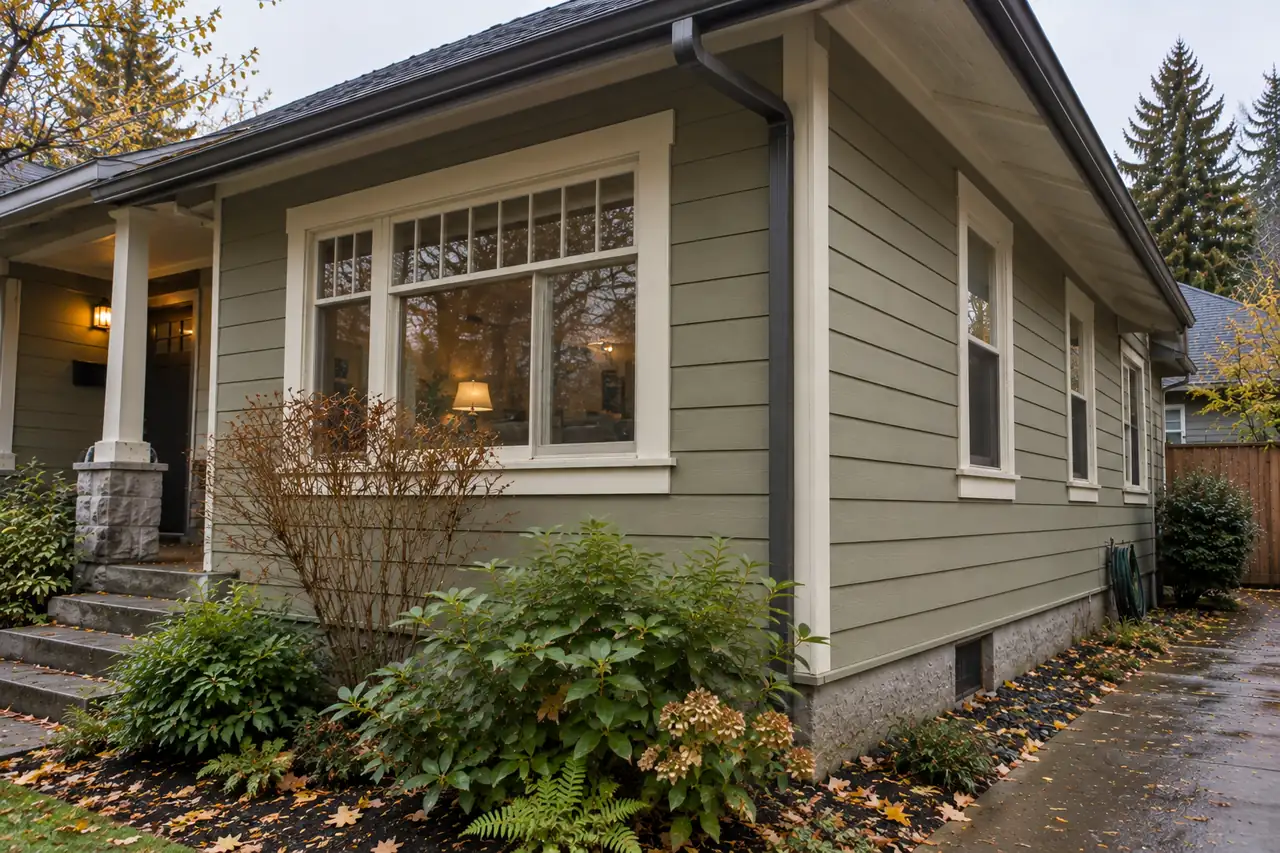
What a siding repair looks like
Soffit, fascia and trim repair
Fascia, soffits and exterior trim sit in the same water path as the siding, and on many Portland houses they rot first. Fascia rots behind gutters that overflow or a roof edge with no drip edge; soffits stain and soften where that water runs back; window and corner trim rot along their top edges, where water sits. A sound trim repair replaces the soft wood, primes the new pieces with their cut ends included or uses fiber cement or PVC trim that does not rot, and fixes the drip edge, gutter or head flashing that let the water in. When the repair is part of a siding job, ask the quote to list trim, soffit and fascia as their own lines, and to say which material replaces them. Cedar trim and boards are covered on the cedar siding repair page.
Signs a repair is no longer worth it
Repair is the right call while the damage stays local. Price a full replacement instead when:
- the same failure is on three or four sides of the house;
- each opened wall turns up more soft sheathing;
- the siding is discontinued hardboard, LP OSB or T1-11 that is failing everywhere;
- or you would be repainting the whole house anyway to blend in the repairs.
A siding inspection checklist covers what to look at on each wall before the rains, and which findings are worth a contractor’s visit.
Pre-1978 houses
Swapping two or three boards on a pre-1978 house can stay inside Oregon’s minor-repair limit, which covers disturbing less than 20 square feet of exterior paint. A leak repair that opens a section of wall usually goes past it, and then the contractor needs the CCB’s Lead-Based Paint Renovation license and a lead-safe setup. The quote should say which side of the line the job is on.
Portland siding repair prices
Angi’s Portland repair guide puts a typical siding repair visit at $903 to $2,835, and fiber cement repair at $3 to $11 per sq ft repaired, Portland; both rows are in the table below with the date they were checked. What pushes a repair past those ranges is nearly always what turns up behind the boards, which is why a sound repair quote prices any sheathing work by the sheet or by the hour. The cost page explains what moves siding repair prices and has the rest of the published figures.
Last updated